Loading

About QORAI CORP

Building the Computing Foundation for Adaptive Intelligence

QORAI CORP is a deep-tech computing company developing Q4 Nexus, a patent-pending computer architecture built on quad logic (four-state computing), Spatial Weave memory, FPGA prototypes, and adaptive AI software. It is designed to move beyond conventional binary computing toward real-time adaptive intelligence.

QORAI’s roots began with ARCHENICS, a design and technology vision platform focused on systems thinking, future environments, and human-centered innovation. In late 2021, Astha Dixit Joshi joined hands with Robby Joshi, AIA, bringing her experience from aerospace software at Northrop Grumman and enterprise technology consulting at Deloitte, where she worked on large-scale digital transformation initiatives for global organizations.

Together, Astha and Robby began exploring a fundamental question:What should computing become in the age of artificial intelligence?

As AI systems advanced, they recognized that the architecture beneath modern computing was still built on foundations developed for an earlier era. AI was demanding persistent memory, context, traceability, relationship awareness, and adaptive recall, yet the underlying infrastructure remained heavily dependent on fragmented software layers, massive data movement, cloud-scale processing, and legacy memory models. From this realization, QORAI CORP took shape in 2022.

At the center of QORAI’s work is a new architectural approach that combines four-state symbolic computing, Q4 Core execution, native Quad Logic instruction sets, Spatial Weave Memory, QDOS, and adaptive-intelligence software. Together, these technologies are designed to help future computing systems preserve not only data, but also its origin, time, context, relationships, and transformation history. QORAI’s mission is to create a new foundation for intelligent machines, systems that can remember, trace, connect, regenerate, and adapt.

OUR INDUSTRY PARTNERS AND COLLABORATORS:

AI Research Labs
FPGA Partners
Cloud Providers
Data Center Operators
Semiconductor Partners
Academic Institutions
Government Research
Enterprise AI Teams
Systems Integrators
Early Pilot Partners
AI Research Labs
FPGA Partners
Cloud Providers
Data Center Operators
Semiconductor Partners
Academic Institutions
Government Research
Enterprise AI Teams
Systems Integrators
Early Pilot Partners

Leadership

Robby Joshi, AIA

Robby Joshi, AIA

President / CEO

Robby Joshi, AIA, is a Florida-based licensed architect, urban designer, author, and futurist. Founder of QORAI CORP, he is spearheading development of the Q4 Nexus computing platform, integrating quad-logic processing, Spatial Weave memory, and adaptive intelligence. His twenty plus years of experience includes orchestrating design-build projects ranging from $600,000 to $600 million, including high-rise towers and major commercial developments. Robby brings the same disciplined vision, attention to detail, and risk-conscious approach to QORAI, helping ensure that products and deliverables are thoroughly reviewed, compliant, and executed to a high professional standard.
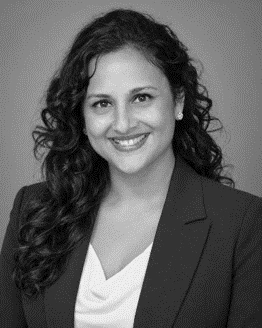
Astha Dixit Joshi

Astha Dixit Joshi

VP / Chief Technology Officer

Astha Dixit Joshi serves as Chief Technology Officer of QORAI CORP, providing executive leadership across software engineering, systems architecture, product strategy, and technology development. Her experience spans aerospace software at Northrop Grumman, enterprise technology consulting at Deloitte, and large-scale digital transformation initiatives. At QORAI, she directs technical strategy, engineering coordination, product development, and the disciplined execution of the company’s Q4 Nexus computing platform.

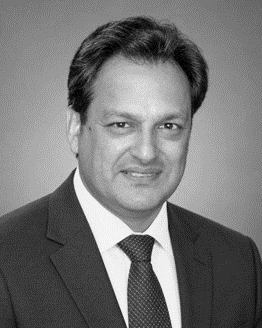
Ash Singhal, FCA, CPA

Ash Singhal, FCA, CPA

VP / Chief Financial Officer

Ash Singhal, FCA, CPA, serves as Chief Financial Officer of QORAI CORP, bringing more than 35 years of senior financial leadership across large US based Corporations. His career includes international finance leadership roles with Keane and Convergys, overseeing multinational operations across North America, Europe, Australia and Pan-Asia. At QORAI, he provides executive oversight of financial strategy, governance, capital planning, risk management, and disciplined growth.

Meet the Team

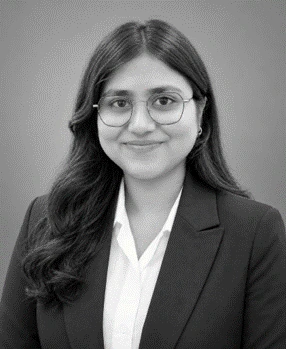
Srimanti Chakraborty

Srimanti Chakraborty

Sr. Project Manager

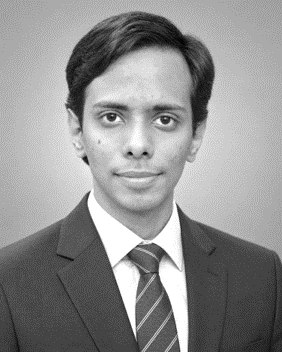
Peter Mayhunt

Peter Mayhunt

Senior Engineer

Nachiketa Chakraborty

Nachiketa Chakraborty

Chief Engineer

Mercedes Perez

Mercedes Perez

Product Design

Nouman Mustafa

Nouman Mustafa

Research & Reports

Razi Ahmed

Razi Ahmed

Hardware Engineer

Sonali Deb

Sonali Deb

Systems Engineer

Eshwar Bodakuntla

Eshwar Bodakuntla

FPGA Synthesis

Isabelle Warner

Isabelle Warner

Marketing Manager

Join Our Team

Help Build What Comes After Today’s Computer

Engineers who joined personal computing in 1978 weren’t applying to maintain an established industry. They were helping invent one. If you want to help discover what comes next, we should talk.

View 12 Open Roles Orlando, FloridaFull-time, on-site

Company Description

QORAI CORP is a fast-paced deep-tech company developing a new computing architecture for adaptive intelligence, persistent contextual memory, Spatial Weave computing, multi-state processing, AI systems, FPGA acceleration, and future semiconductor hardware.

We are looking for people who want to ask:

What should the computer become next?

What We’re Building

Our work spans Q4 Nexus, Q4 Core, Q4-ISA, TetraQore, Weavion-3D, Spatial Weave Memory, SWME, Q4-DOS, Nexus-OS, Q-Sensei AI, Guardian Kernel, Q4-MX1 and Q4 Foundry / Softworks Labs. Some of these systems begin in software. Others are being developed on FPGA hardware. Longer-term research extends into native four-state semiconductor devices and specialized Q4 silicon.

Why Work at QORAI?

You won’t join a large organization to maintain an existing product line. You will be helping determine whether entirely new computing ideas can become real systems.

Competitive salary commensurate with experience

Standard employee benefits package

Paid holidays and paid time off

Opportunities for professional development

Direct interaction with QORAI’s architecture and leadership teams

Significant responsibility in early-stage technology development

A collaborative, interdisciplinary engineering environment

Opportunity to contribute to patentable and potentially industry-defining technologies

Our Culture

We value curiosity, disciplined experimentation, intellectual independence, measurable results, collaboration, and the willingness to challenge assumptions. You should be comfortable working in an environment where:

  • some problems do not yet have textbook answers;
  • prototypes matter more than presentation slides;
  • ideas are challenged through engineering and measurement;
  • software, hardware, AI, memory architecture, and semiconductor research intersect;
  • engineers are expected to understand how their work fits into the larger Q4 Nexus architecture;
  • failure of an experiment is acceptable if it produces useful knowledge;
  • unsupported technical claims are not acceptable.

Role Basics

Location
Orlando, Florida
Employment
Full-time, on-site
Compensation
Competitive salary commensurate with education, expertise, and experience, plus QORAI’s standard employee benefits package.
Experience
Most senior engineering roles require approximately 5–10+ years of relevant professional experience.
Work Authorization
Candidates must be legally authorized to work in the United States. Certain positions may require U.S.-person status because of semiconductor, export-control, customer, or technology-access requirements.

Open Roles

Join us in building what comes next

Architecture & Silicon5

Principal Computer ArchitectQ4 Processor & System ArchitectureFull-timeOrlando, FL

QORAI is seeking a Principal Computer Architect to help define and implement the Q4 Nexus computing architecture, including Q4 Core, Q4-ISA, Spatial Weave Memory, TetraQore, and future specialized Q4 processors.

This individual will work closely with QORAI leadership, FPGA engineers, systems programmers, memory architects, AI engineers, and semiconductor designers.

This is not a conventional CPU-maintenance position. The successful candidate must be comfortable evaluating unconventional computing concepts while applying rigorous computer-architecture principles.

Primary Responsibilities

  • Lead architectural development of Q4 Core.
  • Refine the Q4-ISA instruction model and execution architecture.
  • Define processor/register/control structures.
  • Develop interfaces between Q4 Core and the Spatial Weave Memory Engine.
  • Help architect independent instruction, active-memory, and bulk-memory planes.
  • Define request/completion queues and non-blocking execution behavior.
  • Coordinate FPGA implementation with software golden models.
  • Evaluate pipeline, state-lane, memory, DMA, prefetch, and near-memory design alternatives.
  • Develop measurable performance criteria.
  • Review RTL and system architecture.
  • Help define future Q4-MX2/Q4-MX3 silicon architectures.
  • Maintain architectural consistency across Q4 Nexus products.

Requirements

  • BS or MS in Computer Engineering, Electrical Engineering, Computer Science, or related discipline.
  • 8–15 years preferred in CPU, SoC, accelerator, memory-system, or computer-architecture development.
  • Strong knowledge of processor architecture.
  • Experience with instruction-set architecture and execution pipelines.
  • Understanding of caches, memory hierarchy, DMA, DDR, BRAM/URAM, arbitration, queues, and memory consistency.
  • Strong understanding of the Von Neumann and memory-wall problems.
  • Familiarity with FPGA or ASIC development.
  • Ability to translate architectural concepts into implementable specifications.

Preferred

  • RISC-V, ARM, x86, DSP, NPU, GPU, custom accelerator, or novel processor architecture.
  • FPGA prototyping.
  • Near-memory or compute-in-memory research.
  • Multi-valued logic.
  • AI accelerator architectures.
  • Hardware/software co-design.
Senior FPGA / RTL EngineerQ4 Core & SWMEFull-timeOrlando, FL

QORAI is seeking a Senior FPGA / RTL Engineer to develop the digital hardware implementation of Q4 Nexus on AMD/Xilinx FPGA platforms.

The engineer will work on Q4 Core, B/T/R/C state execution, Q4-ISA decoding, the Spatial Weave Memory Engine, banked memory, request/completion queues, Spatial DMA, and hardware performance instrumentation.

Primary Responsibilities

  • Implement Q4 Core RTL.
  • Develop Q4 triad instruction decoding.
  • Implement B/T/R/C state-lane functionality.
  • Build Q4 register and control structures.
  • Implement SWME hardware.
  • Design banked BRAM/URAM memory.
  • Implement asynchronous request and completion queues.
  • Develop Spatial DMA engines.
  • Support Spatial Weave coordinate-to-index hardware.
  • Integrate AXI interfaces and DDR access.
  • Develop performance counters for memory traffic and stalls.
  • Implement testbenches and regression tests.
  • Use Vivado ILA and other FPGA debugging tools.
  • Compare FPGA execution traces with Q4 software golden models.

Requirements

  • BS/MS in Electrical Engineering, Computer Engineering, or related field.
  • 5–10+ years FPGA/RTL experience.
  • Strong SystemVerilog or Verilog.
  • AMD/Xilinx Vivado experience.
  • AXI4 / AXI4-Lite familiarity.
  • BRAM, UltraRAM, DDR, DMA, CDC, and clock-domain experience.
  • Strong digital design and debugging skills.

Preferred

  • AMD Kria / Zynq UltraScale+ experience.
  • Processor or accelerator design.
  • Memory-controller architecture.
  • RISC-V or custom ISA experience.
  • FPGA performance optimization.
Senior Spatial Memory Systems EngineerTetraQore / SWMEFull-timeOrlando, FL

QORAI is seeking a Senior Memory Systems Engineer to lead development of TetraQore and the Spatial Weave Memory Engine.

This role focuses on one of QORAI’s central research questions:

Can memory be organized and traversed so that intelligent systems move less data while preserving time, context, origin, and state evolution?

Responsibilities

  • Architect Spatial Weave memory structures.
  • Design Spatial Weave Cell Units.
  • Implement B/T/C coordinate systems.
  • Develop locality-preserving traversal.
  • Evaluate Hilbert, Morton/Z-order, and alternative mappings.
  • Develop temporal and contextual traversal.
  • Build regeneration-history mechanisms.
  • Design active working-set management.
  • Develop admission, eviction, replacement, and writeback policies.
  • Implement spatial prefetch algorithms.
  • Develop region-based DMA strategies.
  • Analyze memory locality.
  • Benchmark conventional versus Spatial Weave retrieval.
  • Work jointly with FPGA and C++ teams.

Requirements

  • BS/MS in Computer Engineering, Computer Science, Electrical Engineering, or related discipline.
  • 5–10+ years in memory systems, databases, storage engines, CPU caches, graph systems, distributed memory, or high-performance computing.
  • Strong C/C++.
  • Strong understanding of memory hierarchy.
  • Understanding of data locality and indexing.
  • Experience benchmarking memory-intensive systems.

Preferred

  • Space-filling curves.
  • Graph traversal.
  • KV stores.
  • Persistent memory.
  • Near-memory processing.
  • AI retrieval systems.
  • Vector databases.
  • FPGA hardware acceleration.
Senior Mixed-Signal / ASIC EngineerQ4-MX1Full-timeOrlando, FL

QORAI seeks an experienced Mixed-Signal ASIC Engineer to support Q4-MX1, QORAI’s experimental native multi-state semiconductor research program.

The objective is to investigate whether four discrete electrical computational states can be generated, classified, restored, stored, transformed, and cascaded reliably in fabricated silicon.

Primary Responsibilities

  • Evaluate suitable mixed-signal CMOS processes.
  • Develop four-state voltage reference circuits.
  • Design multi-threshold classifiers.
  • Develop restoration circuitry.
  • Design Q4 buffers, registers, muxes, comparators, and arithmetic test cells.
  • Perform SPICE simulations.
  • Run PVT and Monte Carlo analysis.
  • Support DRC/LVS/PEX.
  • Coordinate MPW tape-out.
  • Support packaging and characterization.
  • Correlate measured silicon with simulation.

Requirements

  • BS/MS/PhD Electrical Engineering or related discipline.
  • 7–15+ years analog/mixed-signal IC experience.
  • At least one ASIC tape-out strongly preferred.
  • CMOS transistor-level design.
  • SPICE.
  • PVT and mismatch analysis.
  • Layout and extraction familiarity.

Preferred

  • Multi-valued logic.
  • Comparator/reference design.
  • Memory circuits.
  • Advanced digital interfaces.
  • Custom standard-cell development.
  • MPW programs.
Embedded Systems / Hardware EngineerFPGA & Q4 Development PlatformFull-timeOrlando, FL

QORAI seeks an Embedded Systems / Hardware Engineer to bridge Q4 FPGA development, embedded firmware, mixed-signal experimentation, and prototype hardware.

Primary Responsibilities

  • Develop FPGA development-board integration.
  • Design interface and daughterboards.
  • Develop ARM/FPGA communication.
  • Support SPI, I²C, UART, GPIO, PCIe, Ethernet, and AXI interfaces as applicable.
  • Develop firmware and boot sequences.
  • Integrate Q4 four-level electrical experiments.
  • Support test instrumentation.
  • Develop PCB prototypes.
  • Perform board bring-up and troubleshooting.
  • Support Q4-MX1 evaluation hardware.

Requirements

  • BS/MS Electrical or Computer Engineering.
  • 5–10+ years embedded/board-development experience.
  • PCB design familiarity.
  • Embedded C/C++.
  • Oscilloscope and logic-analyzer experience.
  • Digital interfaces and power-system knowledge.

Preferred

  • AMD/Xilinx FPGA platforms.
  • High-speed board design.
  • Mixed-signal hardware.
  • ASIC evaluation boards.

Software & Systems5

Senior C++ Systems EngineerQ4-DOS / Q4-VMFull-timeOrlando, FL

QORAI seeks an experienced C++ Systems Engineer to develop the software foundation of Q4 computing.

The role includes Q4-VM, Q4-DOS, instruction execution, register simulation, Spatial Weave memory services, runtime systems, developer APIs, and hardware/software integration.

Primary Responsibilities

  • Develop the Q4 software reference processor.
  • Implement Q4-ISA instructions.
  • Build Q4 register models.
  • Develop Q4-DOS commands.
  • Implement Spatial Weave APIs.
  • Build SCU creation, retrieval, tracing, and regeneration services.
  • Maintain FPGA/software behavioral parity.
  • Develop hardware abstraction layers.
  • Create diagnostics and logging.
  • Develop benchmark frameworks.
  • Write unit and integration tests.
  • Support SDK development.

Requirements

  • BS/MS in Computer Science, Computer Engineering, or equivalent.
  • 5–10+ years professional C/C++ experience.
  • Strong systems-programming background.
  • Knowledge of memory management.
  • Multithreading and concurrency experience.
  • Linux development experience.
  • Strong debugging skills.
  • Familiarity with low-level data structures and binary interfaces.

Preferred

  • Virtual machines.
  • Emulators.
  • Operating systems.
  • Compilers.
  • Embedded software.
  • FPGA host applications.
  • Device drivers.
Senior Operating Systems / Kernel EngineerNexus-OSFull-timeOrlando, FL

QORAI is seeking a Senior Operating Systems / Kernel Engineer to help evolve Q4-DOS toward the larger Nexus-OS environment.

The engineer will design how Q4 services, Spatial Weave memory, intelligent applications, hardware acceleration, security, and future Q4 devices interact with an operating system.

Primary Responsibilities

  • Develop low-level OS services.
  • Design memory-service interfaces.
  • Develop process/task architecture.
  • Implement hardware abstraction.
  • Develop device interfaces.
  • Integrate Q4 Core acceleration.
  • Support secure boot and privilege separation.
  • Work with Guardian Kernel architecture.
  • Develop IPC and service APIs.
  • Assist with scheduler and memory-manager design.
  • Support conventional Linux-hosted development where practical.

Requirements

  • BS/MS in Computer Science, Computer Engineering, or related discipline.
  • 7–12+ years low-level OS or kernel development.
  • C/C++ expertise.
  • Linux kernel, embedded OS, RTOS, hypervisor, or similar experience.
  • Strong understanding of interrupts, memory management, privilege levels, scheduling, drivers, and synchronization.

Preferred

  • RTOS development.
  • Linux kernel modules.
  • Hypervisors.
  • Secure operating systems.
  • Custom hardware drivers.
  • ARM or RISC-V systems.
Compiler / ISA Toolchain EngineerQ4-ISAFull-timeOrlando, FL

QORAI seeks a Compiler and ISA Engineer to develop the programming toolchain surrounding Q4-ISA.

Primary Responsibilities

  • Formalize Q4 instruction encoding.
  • Develop assembler/disassembler tools.
  • Build instruction validators.
  • Develop compiler intermediate representations.
  • Investigate LLVM or other backend integration.
  • Develop code-generation strategies.
  • Maintain ISA test suites.
  • Create instruction-level simulators.
  • Develop developer documentation.
  • Coordinate software and RTL instruction semantics.

Requirements

  • BS/MS in Computer Science, Computer Engineering, or related field.
  • 5–10+ years compiler, ISA, firmware, or low-level software experience.
  • Strong C/C++.
  • Understanding of machine instructions, registers, calling conventions, and code generation.
  • Familiarity with compiler design.

Preferred

  • LLVM.
  • GCC internals.
  • RISC-V.
  • DSP/compiler toolchains.
  • Custom ISA experience.
Senior AI Systems EngineerQ-Sensei AIFull-timeOrlando, FL

QORAI is seeking a Senior AI Systems Engineer to develop Q-Sensei, QORAI’s planned intelligent computing and assistant layer.

The emphasis is not simply chatbot development. The role focuses on integrating AI models with persistent contextual memory, Spatial Weave retrieval, local inference, and QORAI’s broader computing architecture.

Primary Responsibilities

  • Integrate LLM/SLM systems with Spatial Weave memory.
  • Develop persistent-context workflows.
  • Build retrieval and ranking pipelines.
  • Develop local/offline AI capabilities.
  • Integrate Q-Sensei with Q4 Nexus services.
  • Evaluate conventional vector retrieval versus Spatial Weave retrieval.
  • Design agent-memory systems.
  • Develop model adapters.
  • Implement evaluation frameworks.
  • Collaborate with Guardian Kernel engineers on safe action boundaries.

Requirements

  • BS/MS or PhD in Computer Science, AI/ML, Data Science, or related area.
  • 5–10+ years relevant software/ML experience.
  • Python and C++ experience preferred.
  • Strong understanding of LLM architecture and inference.
  • Experience with embeddings, RAG, vector search, model serving, and agent architectures.

Preferred

  • Edge AI.
  • Quantized models.
  • Local inference.
  • Long-term AI memory.
  • Knowledge graphs.
  • AI safety engineering.
Cybersecurity / Guardian Kernel EngineerGuardian KernelFull-timeOrlando, FL

QORAI seeks a senior Security Systems Engineer to develop the architecture underlying Guardian Kernel, QORAI’s proposed independent safety and authority-control layer for intelligent systems.

Primary Responsibilities

  • Design privileged Guardian Kernel services.
  • Implement permission and capability models.
  • Develop secure boot and attestation.
  • Architect process isolation.
  • Implement audit and integrity logging.
  • Develop trusted update mechanisms.
  • Define AI action-control boundaries.
  • Develop human authorization/override mechanisms.
  • Design network and device restrictions.
  • Perform threat modeling.
  • Coordinate independent security testing.

Requirements

  • BS/MS Computer Science, Cybersecurity, Computer Engineering, or related field.
  • 7–12+ years security engineering.
  • Strong systems-security background.
  • Familiarity with kernels, TPMs, secure boot, cryptography, sandboxing, privilege separation, and trusted computing.

Preferred

  • AI security.
  • Embedded security.
  • Safety-critical systems.
  • Formal verification.
  • Hardware security.

Verification & Program2

Verification & Performance EngineerQ4 BenchmarkingFull-timeOrlando, FL

QORAI seeks a Verification and Performance Engineer whose job is to determine whether Q4 actually delivers measurable improvements.

This position is critical because QORAI intends to distinguish engineering evidence from architectural assumptions.

Primary Responsibilities

  • Build Q4 golden-model validation.
  • Compare FPGA and software traces.
  • Measure DDR traffic.
  • Measure bytes transferred.
  • Track processor stall cycles.
  • Measure Active Spatial Plane hit rate.
  • Evaluate prefetch hit/waste rates.
  • Measure DMA burst efficiency.
  • Measure bank conflicts.
  • Analyze request/completion queue occupancy.
  • Benchmark traversal depth.
  • Compare baseline systems against SWME architecture.
  • Develop automated regression systems.
  • Produce reproducible engineering reports.

Requirements

  • BS/MS in Computer Engineering, Computer Science, Electrical Engineering, or related field.
  • 5–10+ years verification/performance engineering.
  • C/C++ and scripting ability.
  • Strong quantitative analysis.
  • Hardware/software performance-analysis experience.

Preferred

  • FPGA verification.
  • SystemVerilog/UVM.
  • CPU/GPU benchmarking.
  • Memory profiling.
  • Linux performance tools.
  • Hardware counters.
Technical Program ManagerQ4 NexusFull-timeOrlando, FL

QORAI seeks a technically sophisticated Technical Program Manager capable of coordinating software, FPGA, memory, AI, semiconductor, operating-system, and research teams.

This is not a conventional administrative project-management position. Candidates should be able to understand the engineering issues being discussed.

Primary Responsibilities

  • Maintain integrated Q4 Nexus roadmap.
  • Track architecture dependencies.
  • Manage milestone gates.
  • Coordinate engineering reviews.
  • Maintain risk registers.
  • Track deliverables.
  • Coordinate outside design houses and research partners.
  • Maintain technical documentation flow.
  • Support prototype demonstrations.
  • Coordinate intellectual-property documentation with management and counsel.

Requirements

  • BS in Engineering, Computer Science, or related discipline preferred.
  • 5–10+ years technical-program experience.
  • Experience managing complex multidisciplinary engineering projects.
  • Strong written and verbal communication.
  • Ability to understand software and hardware development terminology.

Apply

Send us your application

Choose a role, add a short note and attach your resume as a PDF (up to 5 MB). Your application goes straight to our hiring team.

Prefer email? Write to employ.me@qoraicorp.com.

Don’t see your exact fit?

QORAI is building an engineering culture for people who want to work at the intersection of computer architecture, AI, memory systems, FPGA technology, operating systems, and future semiconductor research.

Position Type
Full-time
Work Environment
On-site or Hybrid
Location
Orlando, Florida
Experience
Typically 5–10+ years depending upon position
Education
Bachelor’s degree minimum for most engineering positions; MS/PhD preferred for selected advanced research roles
Work Authorization
Must be authorized to work in the United States. Certain technical positions may additionally require U.S.-person status because of applicable export-control or restricted-technology requirements.

Equal Employment Opportunity. QORAI CORP is committed to providing equal employment opportunities to qualified applicants and employees consistent with applicable federal, state, and local law.

Newsroom & Company Milestones

The Leap Beyond Binary Starts Here

Official QORAI CORP announcements, press releases, and technology updates.

Explore QORAI’s official press releases, announcements, research updates, and company milestones as Q4 Nexus advances from software-defined architecture toward FPGA validation, Spatial Weave Memory demonstrations, and future four-state computing research. This page brings together QORAI’s public journey, from early concept development and patent-pending architecture to Q4-DOS, Q4-ISA, Spatial Weave Memory, FPGA hardware testing, and the broader roadmap toward adaptive intelligence.

What You’ll Find Here

Q4 Nexus: From Software to Silicon

Press releases, featured articles, and development notes as they are published:

  • Official QORAI CORP press releases
  • Q4 Nexus announcements
  • Spatial Weave Memory updates
  • Q4-DOS and Q4-ISA development notes
  • Patent-pending technology milestones
  • FPGA validation progress
  • Partner and collaboration announcements
  • Media statements and company news
Media

Media Inquiries & Press Kit

For interviews, briefings, or media assets, reach the QORAI team directly. Journalists and analysts can request interviews and background briefings with QORAI leadership, plus logos, product imagery, leadership bios, and approved descriptions of the QORAI ecosystem.

Press Releases

  • QORAI CORP Introduces Q4 Nexus, a Patent-Pending Computing Platform for Adaptive Intelligence

    Founder Robby Joshi discusses Quad Logic, 3D-Spatial Weave Memory, Guardian Kernel safety, and the architecture beneath next-generation AI.

  • QORAI CORP Reports Initial FPGA Testing Demonstrating QDOS Working Model

    Early hardware tests advance Q4 Nexus from software-defined architecture toward FPGA validation.

  • QORAI CORP Announces Q4 Nexus, a Patent-Pending Quad Logic Computing Platform

    Advancing from software model to FPGA testing: Q4 Nexus integrates QDOS, BTRC symbolic coding, Spatial Weave Memory, FPGA validation, and future photonic silicon research pathways.

  • QORAI CORP Announces Filing of Spatial Weave Memory System Patent Application

    Focused patent filing protects adaptive memory architecture using Spatial Weave Cell Units, multidimensional indexing, and recursive regeneration.

  • QORAI CORP Announces Filing of Master Umbrella Patent Application for Q4 Computing Platform

    Patent filing covers broad Q4 Nexus architecture, multi-state computing concepts, Spatial Weave Memory, QDOS, and adaptive intelligence systems.

  • QORAI CORP Advances FPGA and RTL Design Pathway for Q4 Quad Logic System

    Company moves Q4 Nexus toward digital FPGA validation using staged software-to-hardware development.

  • QORAI CORP Announces Spatial Weave Memory and Spatial Weave Cell Unit Architecture

    Adaptive memory system designed around Base, Time, Context, and Regeneration.

  • QORAI CORP Introduces Q4 Nexus and QDOS Developer Environment

    QDOS created as a software-first development layer for Quad Logic computing and Q4 instruction testing.

  • QORAI CORP Forms Technical Team to Advance Q4 Nexus Research and Development

    Company begins coordinated software, memory, hardware, and FPGA development effort for an adaptive computing platform.

  • QORAI CORP Begins Research into Q4 Quad Logic Computing Systems

    Deep-tech computing company begins research into post-binary, four-state quad logic computing, adaptive intelligence, and future memory architecture.

Forward-Looking Statement: Statements concerning QORAI's technologies, research, development, commercialization, and potential benefits are forward-looking and subject to technical validation, financing, regulatory requirements, and market conditions. Actual results may differ materially, and no future performance, patent issuance, product release, safety outcome, or commercial success is guaranteed.

Investor Access

Explore QORAI’s Patent-Pending Q4 Nexus Platform

QORAI CORP is developing Q4 Nexus, a patent-pending computing platform designed around four-state symbolic architecture, Q4 Core execution, native Quad Logic instructions, Spatial Weave Memory, QDOS, and adaptive-intelligence software.

As AI infrastructure faces increasing pressure from compute cost, energy demand, GPU dependence, data movement, and cloud-scale deployment, QORAI is focused on a foundational question: what if the next breakthrough in AI comes not only from larger models, but from a better computing architecture beneath them?

QORAI is currently engaging in selective conversations with strategic investors, technology partners, and early-stage capital groups aligned with deep-tech computing, AI infrastructure, edge intelligence, semiconductor systems, and next-generation memory architecture.

Explore the System

Q4 Nexus Overview

Review QORAI’s public overview of Q4 Nexus, Spatial Weave Memory, QDOS, Guardian Kernel, and the software-to-hardware roadmap.

Ask an Investor Question

Talk to QORAI

Submit a question regarding QORAI’s platform, roadmap, patent-pending architecture, prototype status, partnership opportunities, or financing discussions.

Download the Two-Page Brief

Non-Confidential Brief

Review QORAI’s high-level, non-confidential overview. The brief does not disclose proprietary implementation details, source code, confidential algorithms, unpublished patent claims, or trade secrets.

A Platform Built in Stages

Software Architecture → QDOS / Q4-ISA → Spatial Weave Memory → FPGA Validation → Future Q4 Hardware Research

The platform is being developed to support systems that can remember, trace, connect, regenerate, and adapt, while moving more intelligence closer to the user and reducing unnecessary data movement over time.

Who Should Connect

QORAI welcomes serious conversations with strategic investors, deep-tech and AI infrastructure funds, semiconductor and FPGA partners, OEMs, edge AI companies, robotics teams, research institutions, systems engineers, and organizations exploring adaptive memory, local AI, and future computing platforms.

QORAI is not building another AI application. QORAI is building toward a new computing foundation for adaptive intelligence.

Through Q4 Nexus, QORAI is developing a staged architecture designed to move beyond stored data toward systems that can preserve origin, time, context, and transformation history. Explore the system. Review the brief. Begin the conversation.

QORAI Engineering Progress

From Software Architecture to FPGA Hardware Validation

Q4 Nexus is progressing through a staged software-to-silicon development program. QORAI has developed its foundational computing architecture, advanced QDOS and Q4-ISA implementation, filed two U.S. provisional patent applications, and completed initial FPGA processor testing.

Technology Development Status | October 2026

TechnologyCurrent StatusProgress & Validation
QDOSImplemented in Software / FPGA TestedC++ diagnostic interface operating with AMD Vitis. Tested commands include CONNECT AXI, STATUS, HWTEST, BRAMTEST, JMP, BR_B, BR_T, BR_C, and TRIAD.
Q4-ISASpecified / Partially FPGA Tested64 possible three-symbol codon encodings. Four triads (BTR, BTC, BRC, and BCC) tested on FPGA hardware.
Spatial Weave MemoryArchitecture Specified / Software DevelopmentSCU structure, B/T/C mapping, traversal indexing, and regeneration model defined. Complete 3D hardware addressing and memory integrity remain under validation.
FPGA Q4 CoreFPGA TestedAMD Kria KV260, VHDL/Vivado. 9 of 9 defined CPU hardware tests passed, including selected instruction, jump, and branch operations.
BRAM MemoryPartial Hardware ValidationOne complete test passed 1,024 read/write comparisons with zero mismatches. Intermittent timeouts in other runs remain under investigation.
Guardian KernelSpecified / Reference Software DesignTwenty safety directives and C++ engineering reference design developed. Integrated safety enforcement and independent validation remain pending.
Native Four-Voltage SiliconFuture ResearchMulti-level electrical signaling, classification, error detection, and state restoration under architectural investigation.
Photonic Q4Exploratory ResearchPotential optical state transport and silicon-photonic interconnects under conceptual investigation. No photonic hardware demonstration claimed.

Key Hardware Milestone

October 1–15, 2026: QORAI demonstrated selected Q4 processor operations on the AMD Kria KV260 FPGA platform, including QDOS-to-hardware communication through AXI-Lite, instruction execution, branch handling, and spatial telemetry.

Next Engineering Milestones

  • Stabilize repeatable BRAM testing.
  • Validate complete 3D Spatial Weave address mapping.
  • Demonstrate end-to-end SCU retrieval and regeneration.
  • Measure latency, throughput, storage overhead, and energy consumption.
  • Expand FPGA instruction coverage and technical benchmarking.

Two U.S. Provisional Patents Filed

Master Q4 Computing Platform: Application 64/162,133, filed September 25, 2026.

Spatial Weave Memory System: Application 64/165,521, filed September 30, 2026.

Note: Access to confidential materials may require a signed NDA, identity verification, and approval by QORAI CORP. Submission of an inquiry or NDA does not guarantee access to non-public materials or participation in any financing opportunity.

Investor Disclaimer: This page is provided for informational purposes only and does not constitute an offer to sell securities, a solicitation to buy securities, or investment advice. Any investment opportunity in QORAI CORP, if available, will be offered only through appropriate legal documents, investor qualification procedures, applicable exemptions, and compliance with federal and state securities laws. Statements regarding QORAI’s technology, roadmap, patent-pending systems, FPGA validation, future hardware research, market opportunity, partnerships, financing, and commercialization plans are forward-looking and subject to technical, business, regulatory, financial, market, and execution risks. No future product, performance result, valuation, financing outcome, partnership, or commercial deployment is guaranteed.

Partner With QORAI

The next computing platform will not be built by one discipline alone.

QORAI is developing Q4 Nexus, a patent-pending computing architecture that brings together four-state symbolic logic, Q4 Core execution, native Quad Logic instructions, Spatial Weave Memory, QDOS, FPGA validation, and adaptive-intelligence software.

We are inviting collaboration with organizations and experts who can help validate, refine, engineer, and advance the next generation of computing architecture.

QORAI welcomes conversations with

  • Semiconductor companies
  • FPGA and hardware partners
  • AI and edge-computing teams
  • Research institutions and university labs
  • Strategic investors
  • OEMs and product-development partners
  • Systems engineers and software developers
  • Memory-architecture, embedded-systems, and AI infrastructure specialists

Our goal is to work with partners who understand that the future of computing will require more than faster chips or larger models. It will require new architectures for memory, context, traceability, regeneration, and adaptive intelligence.

If you are building at the frontier of intelligent computing, we invite you to help develop, validate, and scale QORAI’s next-generation computing platform.